Description
SPZ Belt Size Chart 487-5600mm Metric V-Belt 9.7x8mm ISO 4184 Supplier
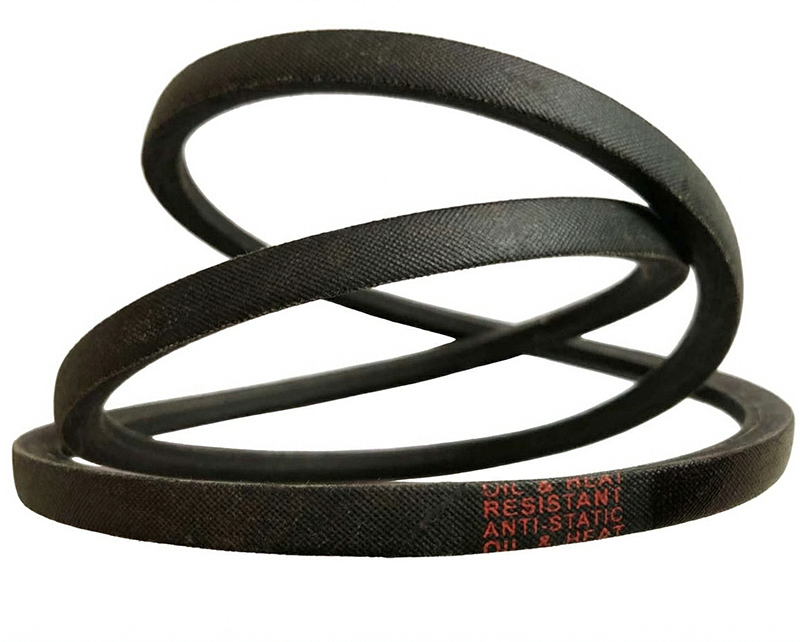
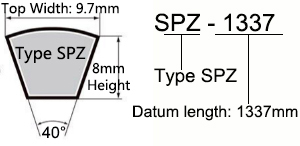
The smallest SP-section wrapped metric V-belt, built on chloroprene rubber for genuine oil, heat, ozone and static resistance. 9.7 mm top width, 8 mm section height, 40° wedge angle — the compact-drive answer for printing presses, textile machines, pumps and long-span industrial systems.
⚡ 95%+ Efficiency
💪 40° Wedge
🔄 40 m/s Max
🌎 -40 to +90°C
📦 MOQ 100 pcs
🚚 Delivery 15-20 Days
The smallest SP wedge-belt section — built for compact, high-speed drives where every millimetre of frame width counts.
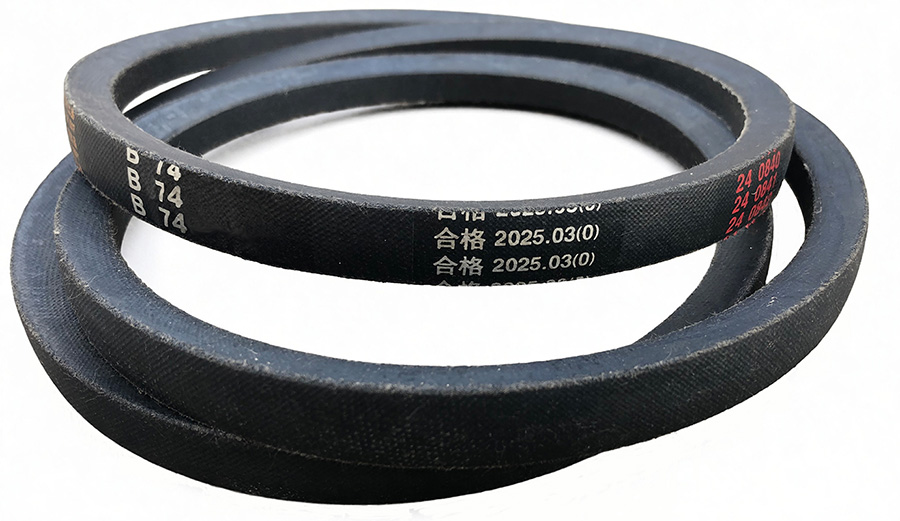
The SPZ belt is a wrapped metric V-belt with a 9.7 mm top width, an 8 mm section height and a 40° wedge angle. It is the smallest section in the SP series, and that size is the whole point: the 40° wedge sinks deeper into the sheave groove and develops more grip per millimetre of belt width than a classical Z-section belt. A drive that would need a wider classical belt can often be done with an SPZ — smaller sheave, lighter shaft load, less bearing wear.
Because the SPZ is the smallest SP section, it is the one called for when the frame is already tight and the load is moderate but continuous. That combination — a compact footprint with steady torque — is where the 40° wedge earns its keep, and it is why the section shows up across printing presses, textile machines, packaging lines, pumps and ventilation systems.
Our SPZ belts are moulded rather than cut, so every belt of the same specification leaves production with an identical datum length. In a matched multi-belt drive that means every belt carries the same share of load from the first hour. No one belt runs tight and takes the punishment, no flank wears out early, and no unexpected break stops production. Because different production batches are moulded to the same length tolerance, a replacement ordered months later drops straight into the same drive without re-engineering the frame.
Every belt is manufactured to ISO 4184, the international standard covering dimensional tolerances and performance requirements for V-belts. When you specify our SPZ belt, you are ordering a part that seats correctly in any ISO 4184-compliant SPZ sheave and runs to a known length tolerance.
Complete Technical Specifications
Verified under ISO 4184 test conditions. Supplied in matched datum lengths for multi-belt drives.
Materials & Construction
Three layers, each doing one job properly. Built on chloroprene rubber for genuine resistance to oil, heat, ozone and static.
🔧Tension Member
Imported high-tenacity polyester cords give exceptional tensile strength with very low elongation under load, and are chemically bonded into the rubber body so they will not separate after millions of flex cycles.
🏙Body Compound
The compression section is formulated from chloroprene rubber, giving the belt genuine cold and heat resistance, oil and chemical resistance, and anti-static performance for harsh plant environments.
📦Outer Cover
A treated fabric is wrapped around the full belt to protect the sidewalls from abrasion and oil mist, while raising the friction the belt needs in the sheave groove.
Why Choose Our SPZ Wrapped V-Belt
Every claim below is measurable on the drive, not just on a spec sheet.
1 Premium-Grade Construction
Polyester cords, chloroprene body and a wrapped fabric jacket — three materials working as one belt rather than three layers that drift apart under load.
2 Stretch-Resistant & Stable
Polyester cords hold their datum length under maximum tension. Belts do not run slack after break-in, so re-tensioning stays rare and unplanned stops stay off the calendar.
3 Wear-Proof in Daily Service
In continuous running under rated load, measured belt wear stays below 2% even after 1,000 hours on the drive. Fewer changeouts, no production line halted for a belt swap.
4 Slip-Resistant Grip
The wrapped cover and 40° wedge keep friction high in the groove. When a load spikes suddenly, the belt stays seated and torque keeps moving to the driven machine.
5 Vibration-Dampening Operation
Smooth, quiet running with minimal vibration — important on printing presses, textile machines and packaging lines where belt chatter translates directly into poor product quality.
6 Energy Efficient
At 95%+ transmission efficiency, more motor output reaches the driven shaft. Over a belt’s service life that difference shows up on the energy bill.
7 Consistent, Batch After Batch
Moulded to length under ISO 4184, so a replacement ordered six months later drops into the same drive without re-engineering the frame.
8 Low-Maintenance Operation
Set the tension correctly at installation and the belt runs for the duration of its service life with only routine visual inspection.
9 Long-Lifespan Construction
Fatigue resistance rated in the millions of cycles, with crack resistance and ozone resistance built into the compound for reliable indoor and outdoor service.
10 Weather-Proof & Chemical Resistant
The chloroprene body and wrapped jacket shrug off oil mist, dust, ozone and UV — suitable for exposed jobsite and outdoor plant conditions as well as the plant floor.
Industries & Equipment Served
The SPZ is specified wherever the frame is tight, the load is steady, and a smooth-running drive protects product quality.
Printing
Web and sheet-fed presses, folding machines and auxiliary equipment. Low vibration and a compact drive are non-negotiable here — belt chatter shows up as registration drift on the sheet. SPZ and SPA are the sections most often specified.
Textiles
Spinning, weaving and finishing-line auxiliaries. Continuous high-speed running makes belt life a direct maintenance cost, and smooth, stable running protects fabric quality.
HVAC & Building Services
Air handling units, ventilation fans, industrial refrigeration and commercial air conditioning. Quiet, efficient running and a long, maintenance-free service interval.
Agricultural Machinery
Seed drills, rotary tillers, mowers, rice mills, micro-tillers, fertiliser spreaders, paddy de-huskers, grain grading screens, cleaning screens, ditch openers and pruning machines.
Petrochemical & Plastics
Dryers, industrial refrigeration, dehumidifiers, mixers, pulverizers, vacuum formers, blow moulders, extruders, forming machines and pelletisers.
Steel & Metallurgy
Auxiliary equipment across drilling machines, sawing machines, plate shears, forming machines, conveyors, separators and feeding systems. Where the main drive calls for a larger belt, the auxiliaries are often SPZ.
Food & Beverage — Including Ice-Cream and Dairy Lines
SPZ is the specified section for household ice-cream machines, washing machines, commercial freezers and central air conditioning. Oil and washdown resistance matter, and the compact profile fits equipment built to a tight envelope.
Auxiliary Equipment Across All Sectors
Fans, electric motors, gear reducers, mixers, air compressors, pumps and pulverizers. If a machine needs to turn reliably in a tight frame, the SPZ belt is on the bill of materials.
Length Marking & Matched Sets
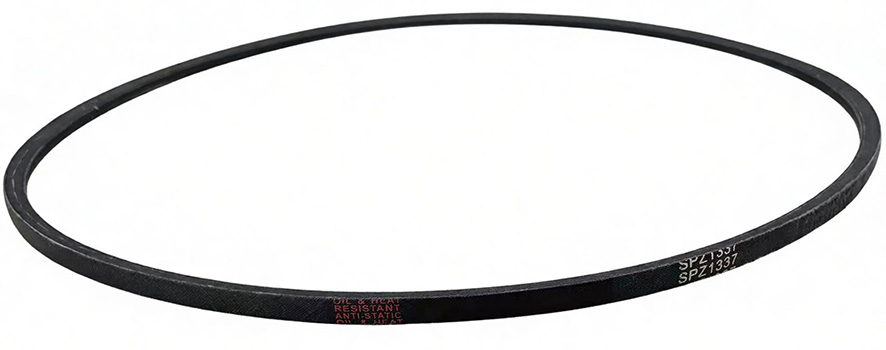
An SPZ belt code reads as SPZ followed by the datum length in millimetres. The number is the datum length; the outside circumference is longer by the standard profile offset and is listed in the downloadable chart below.
The SP range uses metric pitch-length marking, which keeps the procurement side simple: specify the length you need in millimetres, order the matching code, and the belt arrives at that length. Because the belts are moulded to a consistent datum length, every belt in a multi-belt set carries the same share of load. A common failure pattern is one new belt paired with several worn belts: the new belt runs tight, takes almost all the tension and fails in days. Replacing the full set is always the lower-cost choice over the life of the drive.
If you are unsure of the correct length, send us the centre distance, both sheave diameters and the service factor you want to apply. Our engineering team will return a recommended belt code, normally within one working day. MOQ: 100 pcs per size | Delivery: 15-20 days
SPZ Size Chart & PDF Download
The table below groups the full SPZ range into practical pitch-length bands. The complete range runs from SPZ387 to SPZ5600, including long-span sizes SPZ4250, SPZ4318, SPZ4500, SPZ4699, SPZ5200 and SPZ5600. Every size is available through the product options on this page. For the complete dimensional chart — datum length, outside circumference conversion, sheave groove dimensions per ISO 4184 and the full length-by-length listing.
| Datum Length Range | Nominal Code Example | Typical Application |
|---|---|---|
| 387 – 600 mm | SPZ387 to SPZ600 | Compact fans, small conveyors, auxiliary drives |
| 600 – 900 mm | SPZ600 to SPZ900 | Air compressors, pumps, packaging machines |
| 900 – 1300 mm | SPZ900 to SPZ1300 | HVAC fans, textile machines, mixers |
| 1300 – 1800 mm | SPZ1300 to SPZ1800 | Printing presses, conveyors, ice-cream machines |
| 1800 – 2500 mm | SPZ1800 to SPZ2500 | Larger conveyors, industrial fans, washers |
| 2500 – 3700 mm | SPZ2500 to SPZ3700 | Long-span conveyors, screening machines |
| 3700 – 5600 mm | SPZ3700 to SPZ5600 | Maximum-span drives |
All SPZ wrapped metric V-belts are manufactured to the ISO 4184 standard for narrow V-belt drives (SPZ profile), ensuring full dimensional interchangeability with equivalent-profile SPZ V-belts from other mainstream international manufacturers.
📄 Download SPZ belt specification and complete size chart PDF
Installation & Maintenance
Correct Installation Procedure
- Loosen the driven-unit mounting bolts and reduce the centre distance before fitting the belt. Never lever a belt over a sheave rim — the forced bend will break tension cords at one point along the belt.
- Seat the belt in the grooves, then increase the centre distance gradually to apply tension.
- Tension to the specified value with a proper tension gauge. Too tight overloads the bearings; too loose causes slip, heat and rapid wear.
- Run the drive 15–30 minutes under light load so the belt beds into the grooves, then re-check and adjust tension once.
- Check sheave alignment with a straightedge. Misalignment wears one belt sidewall quickly and shortens belt life.
Maintenance Guidelines
- Inspect belts every 500 operating hours for glazing, cracking or exposed cords.
- Keep sheaves clean and free of oil, grease and embedded debris.
- Replace all belts in a matched set together — never replace one belt alone.
- Store spares in a cool, dry place away from direct sunlight and ozone sources such as electric motors.
Troubleshooting Guide
The belt cannot be tensioned
Possible causes: the centre-distance adjustment range is too small; the belt has stretched beyond recovery or the drive frame is undersized and overloaded; the belt length is wrong.
Remedies: re-design the drive with a larger adjustment range; re-calculate the drive data and resize the drive; select the correct SPZ length.
The belt wears out too quickly
Possible causes: the belt has exceeded its service life and the compound has aged; the drive imposes excessive tension; poor installation causes misalignment, uneven wear or vibration.
Remedies: replace on a fixed schedule, correct the drive design, and align and seat the belt properly at installation.
The belt breaks after a short time
Possible causes: it was pried onto the sheave and cords were damaged; a foreign object entered the drive and snapped it; the driven system seized; severe shock loading or a load applied too suddenly.
Remedies: loosen the mounting bolts and reduce centre distance to fit the belt with no forced leverage; fit a guard to keep debris out; stop and clear the fault before restarting; re-design for the actual shock load and ramp loads up gradually.
Black powder is coming off the belt
Cause: on a new installation the sheave surface finish is too rough, so the belt rubs off fine black rubber dust.
Remedy: improve the sheave surface finish.
The belt slips
Possible causes: insufficient tension, worn or contaminated sheave grooves, or a drive ratio that no longer matches the requirement.
Remedies: adjust tension to the specified value with a tension gauge; inspect and replace worn or contaminated grooves; correct or replace the drive so the ratio matches.
10 Frequently Asked Questions
What is the minimum order quantity for SPZ belts?
Our standard MOQ is 100 pieces per size. For mixed-length orders, recurring supply contracts or bonded warehouse programmes, contact our sales team for volume pricing and a flexible MOQ.
What is the delivery lead time?
Standard delivery is 15–20 days from order confirmation, depending on order volume and current production scheduling. Rush orders can be accommodated on request.
Do you support custom belt lengths?
Yes. We supply custom datum lengths outside the standard SPZ387–SPZ5600 range, and we also manufacture banded (joined) V-belts for drives where individual belts can turnover or whip. Provide the required dimension, section and application. Custom items may carry a longer lead time and a minimum quantity.
How do I read the SPZ belt code?
The number after SPZ is the datum length in millimetres. So SPZ1337 has a datum length of 1337 mm. The outside circumference is longer by the standard profile offset — see the conversion chart in the downloadable PDF.
What material is the SPZ belt made from?
The SPZ body is chloroprene rubber (CR), with a polyester tension cord and a wrapped fabric outer jacket. This gives the belt genuine resistance to oil, heat, ozone and static.
Are your SPZ belts ISO certified?
Yes. All our SPZ wrapped V-belts are manufactured to ISO 4184, covering dimensional tolerances, length consistency and performance requirements.
Can I replace just one belt in a multi-belt drive?
We recommend replacing the full matched set. A single new belt runs tighter than the worn belts beside it, takes most of the load and fails early. Replacing all belts is cheaper over the drive’s life.
What temperature can the standard SPZ belt handle?
The standard chloroprene rubber construction runs reliably from -40°C to +90°C, with resistance to oil, chemical, ozone and static conditions built in.
Do you provide technical support for drive design?
Yes. Our engineering team provides free support for drive calculation, belt selection and tensioning. Send centre distance, sheave diameters and service factor and we respond within one working day.
How do I identify my current SPZ belt?
The code is printed or embossed on the belt back, for example SPZ1337 for a 1337 mm datum length. If the marking has worn away, measure the datum length and top width and send both figures to us — we will identify the correct replacement.
Ready to Specify Your SPZ Belts?
Send the belt code, quantity and required delivery date. We will confirm stock, issue a formal quote and ship within 15–20 days.
Related Products: SPA Belt | 3V Belt | All V-Belts
Reviews
There are no reviews yet.