Description
S2M Timing Belt 60-3700mm 2mm 4-10mm CR ISO 13050 Supplier
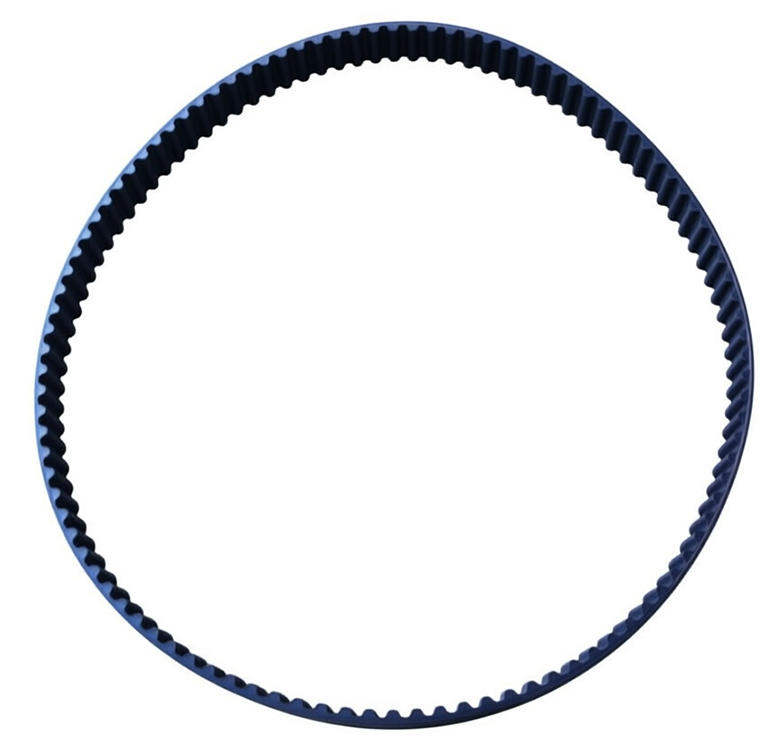
STD / STS S2M Belt — 2.00 mm modified curvilinear tooth for micro-precision automation, 3D printers, medical devices and miniature robotics. Not HTD 2M. Not interchangeable.
STD S2M vs HTD 2M
Both belts share a 2.00 mm pitch. That is where the similarity ends.
| Item | STD / STS S2M | HTD 2M |
|---|---|---|
| Tooth shape | Flat-top semi-circular (modified curvilinear) | Full round arc |
| Backlash | Lower — better micro positioning | Higher than STD |
| Noise | Quieter under servo load | Can be noisier |
| Best for | Micro-precision automation, 3D printers, medical, miniature robots | General high-torque micro industrial drives |
| Pulley | S2M / STS pulley only | HTD 2M pulley only |
| Interchangeable? | No — same pitch, different tooth geometry | |
Do not fit an S2M belt on an HTD 2M pulley
The teeth will not seat correctly. Expect poor meshing, accelerated wear, noise and lost positioning accuracy. Always match the pulley marking: S2M / STS = STD profile; 2M = HTD profile.
Overview
The S2M Synchronous Belt is the 2.00 mm pitch member of the STD / STS (Super Torque Drive) curvilinear belt family. It transmits power by tooth-and-groove meshing, so there is no slip and no speed drift — exactly what miniature servo systems and precision stages need.
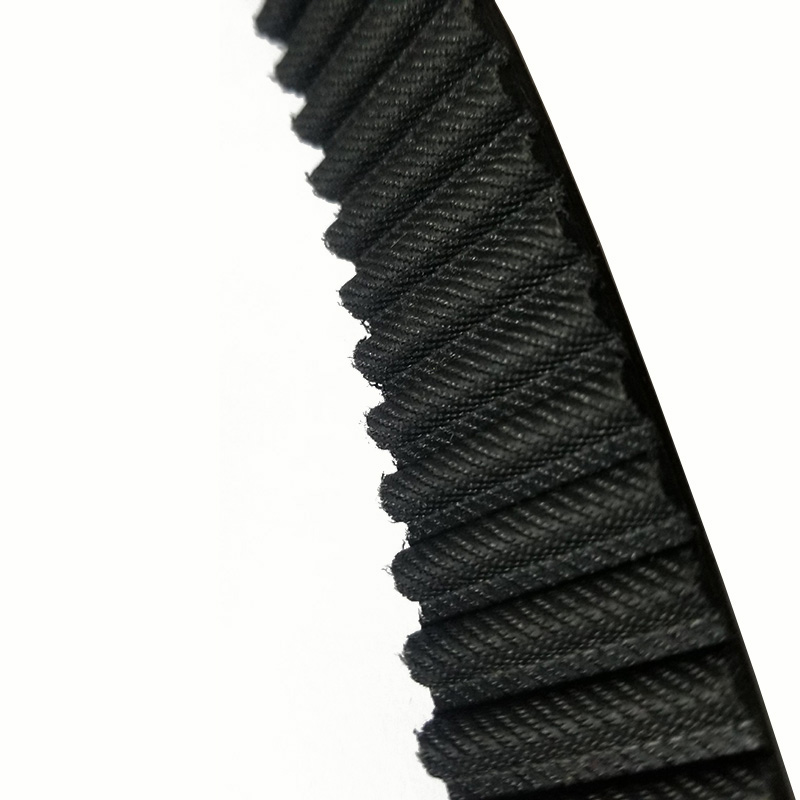
The flat-top semi-circular tooth increases contact area at the pulley root, cuts backlash and holds repeatable positioning better than a standard HTD 2M tooth of the same pitch. The belt needs no lubrication, creates no pollution and runs quietly.
Transmission efficiency reaches 98% or more, the speed ratio extends to 1:10, and the allowed line speed reaches 50 m/s. Multi-shaft drives are supported.
Technical Specifications
MOQ: 300 pcs, common widths: 4 / 5 / 6 / 8 / 10 mm. Custom widths available on request.
All S2M timing belts are manufactured in accordance with the ISO 13050 standard for metric-pitch curvilinear (STD/STS) profile systems, ensuring full dimensional interchangeability with equivalent-profile S2M timing belts from other mainstream international manufacturers.
Materials & Construction
LAYER 01 Tensile Member
High-strength glass fiber cord. Very low elongation, stable pitch length under load.
LAYER 02 Body Compound
The belt body uses premium synthetic chloroprene rubber (CR). HNBR compounds are available on request for high-temperature or oil-resistant applications.
LAYER 03 Tooth Facing
Specially treated Nylon 66 elastic fabric. Low friction, high wear resistance, preserves the flat-top tooth form.
S2M Timing Belt range covers from S2M-52 to S2M-3700. Sizes listed with prices on this page are in stock for quick ordering; the complete size list is available in the downloadable specification PDF.
Download S2M Timing Belt Complete Size Chart & Dimensional PDF
Why Engineers Specify S2M
Lower Backlash
Flat-top curvilinear teeth seat firmly, keeping micro-servo positioning repeatable.
No Slip, Constant Ratio
Tooth meshing holds the speed ratio even under varying load.
Quiet Under Load
Less mesh impact than HTD 2M in miniature feeder and robot axes.
High-Speed Capable
Line speed up to 50 m/s with stable, low-vibration running.
Compact Drives
2 mm pitch allows very small pulley diameters and space-saving layouts.
Long Service Life
Good dynamic flex, ozone, aging, heat and wear resistance from the chloroprene rubber (CR) body.
Chemical Resistance
Resists oil, water, acids and alkalis in standard construction.
Maintenance-Free
No lubrication, no pollution, minimal upkeep.
Where S2M Belts Are Used
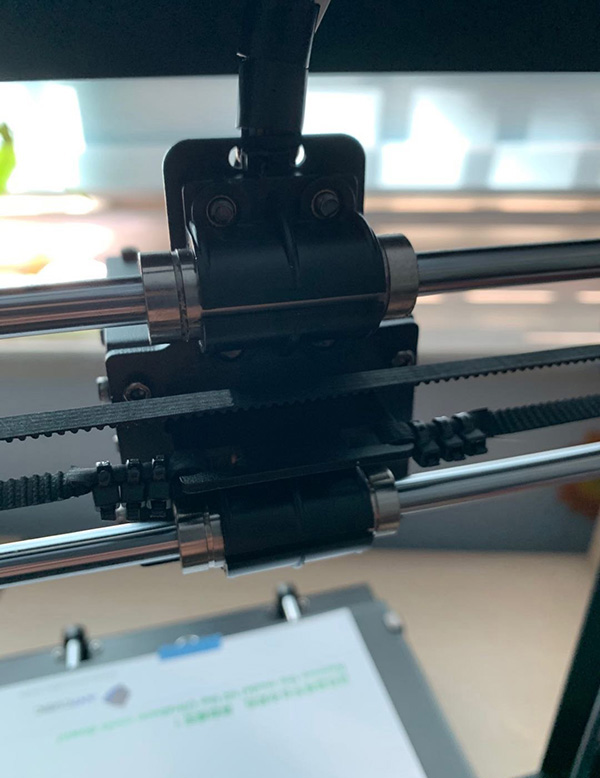
- 3D printers & plotters: X/Y/Z axes, extruder drives.
- Miniature automation: micro linear modules, pick-and-place heads.
- Medical & lab equipment: scanners, pumps, diagnostic stages.
- Office & instruments: printers, copiers, miniature conveyors.
- Replacement on STD/STS installs: direct swap on existing S2M pulley systems.
Installation & Care
- Inspect on receipt: clean surface, belt not twisted, teeth full and well formed.
- Never bend or crimp — this damages the glass fiber cord.
- Avoid scratches and chemicals; keep away from strong oxidising acids; limit long oil/water contact.
- Release tension before removal. Never pry the belt off under load with improvised tools.
- Confirm pulley profile: S2M belt goes on S2M pulley only.
- Tension just enough to prevent tooth jump at maximum load.
- Keep the drive clean; replace at first sign of tooth wear or cracking.
Frequently Asked Questions
What is an S2M synchronous belt?
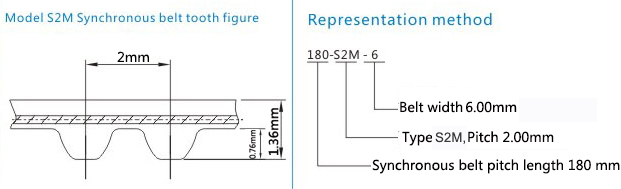
The S2M synchronous belt is a metric curvilinear (flat-top) timing belt with a 2.00 mm pitch, a 0.76 mm tooth height and a 1.36 mm belt thickness. It uses a flat-top semi-circular tooth for accurate positioning, low backlash and quiet, high-speed running in miniature servo and precision drives.
What is the difference between S2M and HTD 2M?
Both use a 2 mm pitch, but they are different profiles. S2M uses the STD/STS flat-top curvilinear tooth, while HTD 2M uses the HTD rounded curvilinear tooth. Their tooth geometry and pulleys differ, so an S2M belt and an HTD 2M belt are not interchangeable.
What is the difference between S2M and MXL?
S2M is a metric curvilinear (STD/STS) belt with a 2.00 mm pitch and a 0.76 mm tooth height. MXL is an inch-pitch trapezoidal belt with a 2.032 mm (0.080 inch) pitch and a 0.51 mm tooth height. The two have different tooth shapes and require different pulleys.
How do I read an S2M model number such as 400-S2M-6?
The designation is pitch length – profile – width. So 400-S2M-6 means a 400 mm pitch line length, an S2M 2 mm flat-top curvilinear profile, and a 6 mm belt width. To find the number of teeth, divide the pitch length by the pitch: 400 / 2 = 200 teeth.
What widths and lengths are available?
We stock 131 standard S2M models from 60 mm to 3700 mm in five widths: 4, 5, 6, 8 and 10 mm. Custom widths and non-standard lengths can be manufactured on request.
What materials and construction do S2M belts use?
Every S2M belt uses a three-layer composite construction: a high-strength glass fiber tensile cord, a chloroprene rubber (CR) body, and a nylon 66 tooth facing for wear protection and low friction. Special HNBR compounds are available on request for high-temperature or oil-resistant applications.
What applications are S2M timing belts used for?
S2M timing belts are used for compact, high-precision drives such as 3D printers, medical and diagnostic equipment, ATMs and banknote handlers, micro servo and stepper motor drives, small CNC routers, robotics, office printers and copiers, consumer electronics, vending machines and POS terminals.
Are S2M timing belts interchangeable with belts from other manufacturers?
Yes. Our S2M timing belts are manufactured to the ISO 13050 standard for metric-pitch curvilinear (STD/STS) profile systems and are fully dimensionally interchangeable with equivalent-profile S2M timing belts from other mainstream international manufacturers.
Need an S2M Belt?
Tell us pitch length and width. We confirm STD/STS compatibility and quote from stock lengths.
Related: 2M Timing Belt | MXL Synchronous Belt | Full Catalog
Reviews
There are no reviews yet.